
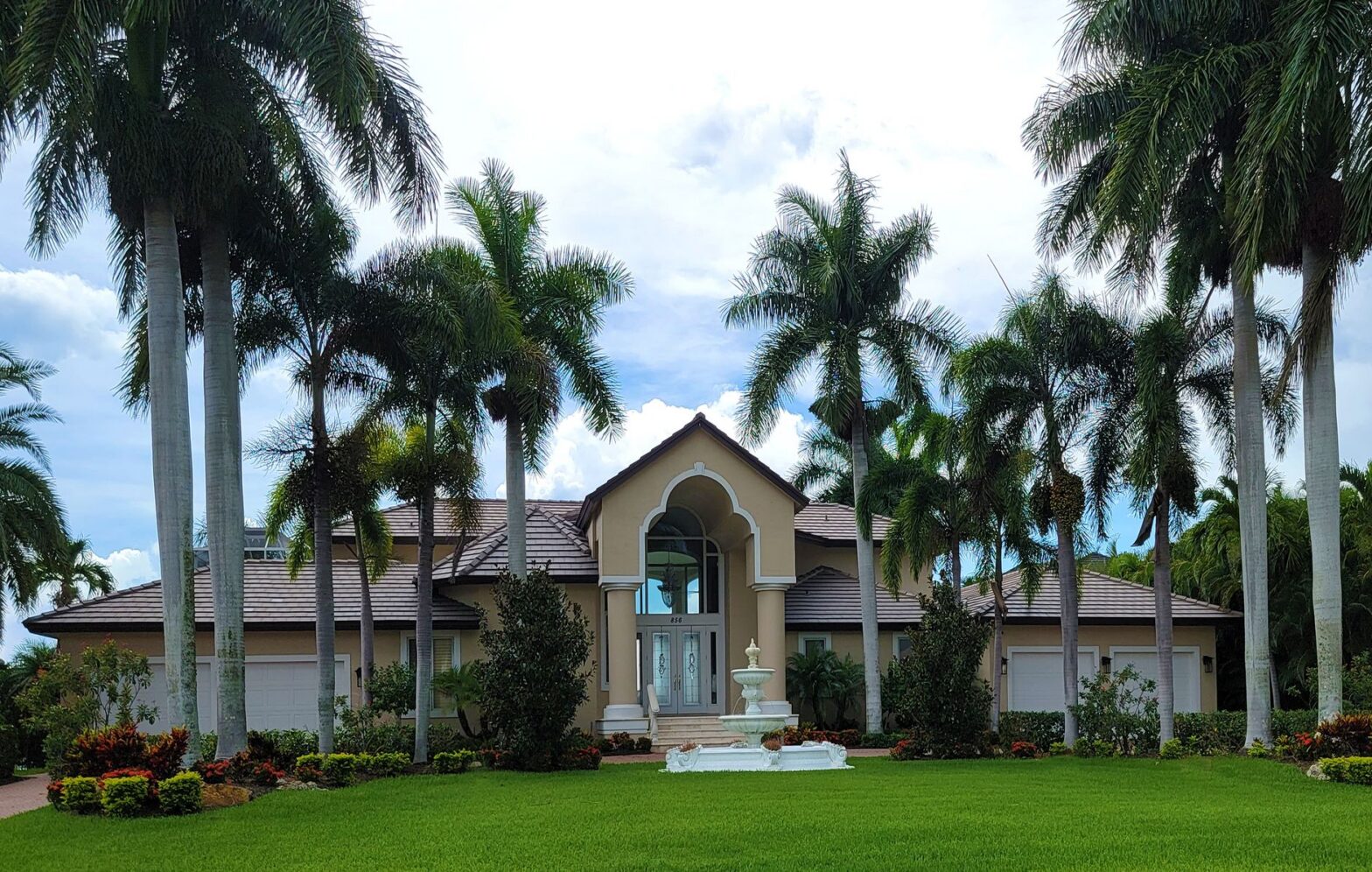
If you own a home in Florida and you have children, Florida’s constitution strips away your power to leave that home to whoever you choose. The florida homestead descent and devise restrictions are among the most misunderstood—and most consequential—rules in Florida estate planning, and they frequently produce outcomes homeowners never intended.
What Florida Homestead Descent and Devise Restrictions Are
Florida’s homestead protections serve two purposes: they shield your home from creditors during your lifetime under Article X, Section 4 of the Florida Constitution, and they dictate who inherits your home when you die. The second function—descent and devise—operates as a forced inheritance scheme that overrides your will if you have a surviving spouse or minor children.
Article X, Section 4(c) of the Florida Constitution provides that homestead property cannot be devised (given away by will) if the owner is survived by a spouse or minor child, except that a homestead may be devised to the owner’s spouse if there are no minor children. This constitutional restriction applies automatically. You do not opt into it. If you own Florida homestead property and die with a spouse or minor child, the restriction governs—even if your will says otherwise.
When a homestead owner dies owning property subject to these restrictions, Florida Statutes Section 732.401 controls how the property descends. As the Florida Supreme Court explained in King v. Ellison, 648 So. 2d 666 (Fla. 1994), “Section 732.401(1) prescribes how property shall descend when not devised as permitted under Florida law or the constitution… the spouse takes a life estate and the lineal descendants take a vested remainder.” This means the surviving spouse receives only a life estate—the right to live in the home for life—while the children receive the remainder interest, becoming full owners when the surviving spouse dies.
The restriction is binary. Either you can devise your homestead freely (because you have no spouse and no minor children), or you cannot devise it at all (because you have a spouse or minor child). There is no middle ground, no partial devising, and no exception for “good reasons” to disinherit a child or leave everything to your spouse.
When the Devise Restriction Applies
The restriction on devising Florida homestead property applies whenever two conditions are both met at the moment of death: (1) the property qualifies as homestead under Article X, Section 4(a) of the Florida Constitution, and (2) the decedent is survived by either a spouse or a minor child.
Homestead status depends on occupancy and intent. The property must be the decedent’s primary residence, and it cannot exceed one-half acre within a municipality or 160 acres outside a municipality. If the decedent lived in an apartment or rented property at death, there is no homestead to restrict. If the decedent owned multiple homes but did not establish permanent residence in Florida, the property may not qualify as homestead. But if the decedent permanently resided on the property and held title at death, the property is almost certainly protected homestead.
The second condition—survival by spouse or minor child—requires careful analysis. A “minor child” under Florida law is anyone under age 18. If you die with a 17-year-old daughter, the restriction applies. If your youngest child turns 18 the day before you die, the restriction does not apply (assuming you are unmarried or widowed). Stepchildren do not trigger the restriction unless they have been legally adopted. Grandchildren do not trigger the restriction unless you have adopted them or they are lineal descendants of a deceased child.
Marital status is determined at death. If you are legally married when you die—even if separated, even if divorce proceedings are pending—you have a surviving spouse, and the restriction applies. A common-law marriage is not recognized in Florida for relationships formed after January 1, 1968, so a long-term partner will not trigger the spousal restriction unless you are formally married.
Critically, the restriction applies even if your will explicitly attempts to devise the property differently. In Snyder v. Davis, 699 So. 2d 999 (Fla. 1997), the Florida Supreme Court confirmed that “the homestead provision delineates the restrictions a homestead owner faces when attempting to alienate or devise the homestead property.” A will provision that violates the constitutional restriction is void to that extent. The homestead descends by operation of law under Section 732.401, not according to the will.
How Homestead Descends When You Cannot Devise It
When the devise restriction applies, Florida Statutes Section 732.401(1) dictates the outcome. The distribution depends on which family members survive you.
If you are survived by a spouse and one or more lineal descendants (children, grandchildren, etc.), all of whom are also descendants of the surviving spouse, the spouse may elect to take either a life estate with the descendants taking a vested remainder, or the spouse may take an undivided one-half interest in the property as a tenant in common with the descendants who take the other half. This election must be made within six months of the decedent’s death or within two years if no estate administration is pending.
If you are survived by a spouse and one or more lineal descendants, at least one of whom is not a descendant of the surviving spouse (a child from a prior relationship), the spouse takes a life estate and the lineal descendants take the vested remainder. There is no election in this scenario. The blended-family situation forces the life-estate structure to protect the non-mutual children’s inheritance.
If you are survived by a spouse but no lineal descendants, the homestead passes entirely to the spouse. The restriction does not apply when there are no descendants, so the property can pass outright by will or, if not devised, by intestate succession to the spouse under Section 732.102.
If you are survived by lineal descendants but no spouse, the restriction also does not apply. You may devise the homestead to whomever you wish. If you die intestate, the descendants inherit equally under Section 732.103.
The life-estate-with-remainder structure often surprises families. The surviving spouse cannot sell the property without the remainder beneficiaries’ consent. The spouse cannot mortgage the property alone. The spouse cannot even make substantial alterations without potentially impairing the remaindermen’s future interest. Meanwhile, the children (remainder beneficiaries) own a future interest they cannot occupy and cannot sell easily because a life estate encumbers the property. Many families discover this structure only after the homestead owner’s death, when florida homestead and probate issues arise during estate administration.
When You Can Devise Homestead Property Freely
The constitutional restriction is not absolute. There are scenarios in which a Florida homestead owner retains full testamentary freedom over the property.
First, if you die with no spouse and no minor children, you may devise your homestead to anyone you choose. Adult children do not trigger the restriction. You may leave the property to one child and exclude others, leave it to a friend, leave it to charity, or leave it in trust. The restriction simply does not apply.
Second, if you are married but have no lineal descendants of any age, the restriction allows you to devise the homestead to your spouse (and only your spouse) by will. You cannot devise it to anyone else, but a will provision leaving homestead to your spouse is valid and effective. Without a valid will, the homestead passes to the spouse by intestate succession anyway, so the practical effect is often the same.
Third, the restriction applies only to homestead property as defined by the Florida Constitution. Investment property, vacation homes, rental property, and commercial real estate are not homestead and may be devised freely regardless of your marital status or whether you have minor children. Only your primary residence qualifies as protected homestead, and only protected homestead triggers the descent and devise restrictions.
Fourth, if you convey the homestead during your lifetime, the property is no longer part of your probate estate and the devise restriction becomes irrelevant. A properly structured transfer to a florida revocable living trust how it works and why you need one during your lifetime can remove the property from probate and allow greater flexibility in how the property is distributed after death—but this strategy requires careful drafting to avoid constitutional problems and unintended tax consequences.
It is critical to understand that the restriction is based on status at death. If you execute a will when you have no minor children and you believe you can devise your homestead freely, but a minor child is later born or adopted, the earlier will provision becomes void as to homestead when you die. The constitutional restriction overrides the will regardless of when the will was executed.
Common Mistakes and Misconceptions
Florida homestead descent and devise restrictions generate frequent planning errors. Many of these mistakes stem from misunderstanding the scope and effect of the constitutional rule.
Assuming your will controls. The most common mistake is assuming that a will provision leaving homestead property to a surviving spouse (or to anyone else) will be honored. If you have children—even adult children—and you leave your homestead to your spouse in your will, that provision is void. The property descends under Section 732.401 instead. As the court explained in Taylor v. Payne, 17 So. 2d 615 (Fla. 1944), “except as the power to will property has been limited indirectly by Article X of the Constitution of Florida, which inhibits the alienation of homestead property by will where the owner thereof has children in esse,” the testator’s intent is subordinated to the constitutional mandate.
Believing joint tenancy solves the problem. Some homeowners add a spouse or child to the deed as a joint tenant with right of survivorship, assuming this avoids probate and the descent restriction. While joint tenancy does avoid probate, creating it may itself violate the homestead protections. The Florida Supreme Court held in Jackson v. Jackson, 107 So. 255 (Fla. 1926), that “homestead real estate owned by a husband who has a child or children living, cannot be conveyed by the husband to his wife, by the means of a deed of conveyance without consideration.” Any inter vivos transfer of homestead when you have a spouse or minor children requires spousal consent or adequate consideration, and gratuitous transfers can be set aside.
Ignoring minor children who live elsewhere. A child does not need to live with you or depend on you financially to trigger the restriction. If you have a minor child from a prior marriage who lives with the other parent in another state, that child is still your lineal descendant, and the restriction applies. Estrangement does not eliminate the constitutional protection.
Confusing creditor protection with devise restrictions. The Article X, Section 4 creditor exemption and the descent-and-devise restriction are related but distinct. Property exempt from creditors during life is not automatically subject to devise restrictions at death. Conversely, property that can be devised freely is not necessarily exempt from creditors. The two rules must be analyzed separately.
Relying on outdated legal advice. Florida’s homestead laws have been amended and interpreted by appellate courts over the decades. Advice you received in 1995 may no longer be accurate in 2026. Changes to Section 732.401 in the 1970s, amendments to the Florida Constitution in 1968 and 1984, and evolving case law all affect how these rules apply today. Working with current florida homestead rights probate complete guide materials is essential.
Failing to address the life-estate problem. Even when families understand that the spouse gets only a life estate, they often fail to plan for the practical consequences. The surviving spouse and remainder beneficiaries become co-owners with conflicting interests. The spouse may want to sell and downsize; the children may want to preserve the property as an investment. The spouse may need to refinance to access equity; the children must consent. Partition actions, disputes over maintenance and taxes, and lis pendens in florida real estate what it is how it works and how to remove it claims can all result. Pre-planning to address these issues—through family agreements, life insurance to equalize inheritances, or strategic lifetime transfers—is far easier than resolving disputes after death.
Planning Strategies to Address the Restrictions
Because the constitutional restrictions cannot be avoided by will, effective planning requires either accepting the statutory scheme or restructuring property ownership to remove the homestead from probate altogether.
The most flexible tool is the revocable living trust. Transferring homestead property to a properly drafted revocable trust during your lifetime removes the property from your probate estate. The property is then distributed according to the trust terms after your death, not according to intestate succession or the constitutional descent rules. However, the transfer to the trust must comply with homestead restrictions on inter vivos alienation. If you have a spouse, the spouse must join in the transfer or waive homestead rights. If you have minor children, structuring the transfer as one to yourself as trustee (rather than a third party as trustee) may preserve the homestead character while avoiding constitutional problems.
A second strategy is the spousal waiver. Florida Statutes Section 732.702 allows a spouse to waive homestead rights, intestate succession rights, elective share rights, and other statutory entitlements. A carefully drafted prenuptial or postnuptial agreement can include a homestead waiver, permitting the homestead owner to devise the property to children or others. Such waivers must meet strict formality requirements and should be prepared with independent counsel for both spouses.
Life insurance is often used to equalize inheritances when homestead must pass to some beneficiaries under the descent rules. If your homestead will pass as a life estate to your spouse and remainder to your children, you might purchase life insurance naming your spouse as beneficiary to provide liquid assets to offset the restricted inheritance. This does not change how the homestead descends, but it can ease financial hardship and reduce family conflict.
Some homeowners choose to sell the homestead before death and convert it to non-homestead assets that can be devised freely. This strategy works if the homeowner is willing to downsize or relocate, but it eliminates the creditor protection and property tax benefits that homestead status provides during life. The trade-off may not be worthwhile unless the need for testamentary flexibility is urgent.
Finally, addressing the problem through open family communication and a well-drafted family settlement agreement can prevent disputes after death. If all interested parties (spouse and children) agree in advance how the homestead should be handled, they can enter a binding agreement to sell the property and divide proceeds, transfer the property to one beneficiary with compensation to others, or accept the life-estate arrangement with clear terms on taxes, maintenance, and future sale. These agreements must be carefully drafted to avoid the helpful trap florida undue influence and the dutiful child exceptions, but they can be effective when all parties act in good faith.
The Constitutional and Policy Rationale
Florida’s homestead protections date to the mid-19th century and reflect a policy choice to prioritize family stability and protection of the family residence over individual testamentary freedom. The original purpose was to prevent a decedent from disinheriting a spouse and minor children by devising the homestead to a mistress, a creditor, or a favored older child, leaving the surviving family homeless.
The policy rationale has been debated extensively. Critics argue that the restriction is paternalistic, inflexible, and poorly suited to modern family structures. It prevents a homeowner from leaving property to a same-sex partner if there are children from a prior marriage. It forces blended families into the life-estate structure even when all parties would prefer a different arrangement. It can trap a surviving spouse in a home they cannot afford to maintain and cannot sell without the children’s consent.
Proponents respond that the restriction serves an important protective function, preventing improvident or manipulated testamentary dispositions and ensuring that children are not entirely disinherited. Because the restriction applies automatically, it protects vulnerable family members without requiring them to challenge a will or prove undue influence.
Whatever the merits of the policy debate, the constitutional restriction remains firmly embedded in Florida law. It has survived multiple constitutional revisions, and the Florida Supreme Court has consistently enforced it. Until the Florida Constitution is amended, homestead owners and their families must plan around the restriction, not through it.
Common Questions About Florida Homestead Descent and Devise Restrictions
Can I leave my Florida home to my spouse if we have adult children?
No, not by will. If you have any lineal descendants (children or grandchildren), you cannot devise your homestead to your spouse through a will. The property will descend under Florida Statutes Section 732.401, giving your spouse either a life estate or a half interest (depending on whether all descendants are also descendants of your spouse). To leave the property outright to your spouse, you must either transfer the property to a revocable living trust during your lifetime or obtain a waiver of homestead rights from your spouse and descendants if permitted under specific circumstances, though such waivers are not effective for post-death transfers of homestead.
What happens if my will says my spouse gets everything?
If your will says your spouse gets everything but you own Florida homestead property and have lineal descendants, the will provision is void as to the homestead. The homestead descends according to Section 732.401 regardless of what your will says. Your other assets (non-homestead property) will pass to your spouse according to your will, but the homestead will not. This result surprises many families who assumed the will controlled all property. The constitutional restriction overrides the will automatically.
Can I avoid the restriction by adding my spouse to the deed?
Possibly, but with significant risk. Adding your spouse to the deed as a joint tenant with right of survivorship can avoid probate and allow the property to pass to the surviving spouse by operation of law. However, if you have children (especially minor children), the transfer may violate the homestead alienation restrictions. Jackson v. Jackson suggests that gratuitous transfers of homestead to a spouse when children are living may be invalid. Additionally, adding a joint tenant creates immediate co-ownership, exposing the property to the co-owner’s creditors and complicating Medicaid planning. This strategy should be implemented only with competent legal advice.
Do stepchildren count as lineal descendants for purposes of the restriction?
No, unless you have legally adopted them. Stepchildren are not lineal descendants under Florida law unless a formal adoption has occurred. If you die survived by your spouse and only stepchildren (no biological or adopted children of your own), you may devise your homestead to your spouse or anyone else because you have no lineal descendants. However, if you have both biological children and stepchildren, the biological children trigger the restriction.
What if I want to disinherit one of my children?
You cannot disinherit a child with respect to Florida homestead property. If you have multiple children, all lineal descendants share the remainder interest equally under Section 732.401. The statute does not permit favoring one child over another or excluding a child from the homestead inheritance. If you wish to disinherit a child, you must do so with respect to non-homestead assets, or you must transfer the homestead out of your name during your lifetime (subject to the alienation restrictions and potential Medicaid consequences).
How does a life estate affect my spouse’s ability to sell the home?
A life estate significantly restricts your spouse’s ability to sell the home. The life tenant (your spouse) cannot sell the property without the consent of the remainder beneficiaries (your children). If the property is sold, the proceeds must be divided between the life tenant and remaindermen according to actuarial tables that value the life estate based on the life tenant’s age. Mortgage lenders are often unwilling to lend against a life estate because the security interest is limited. Property tax benefits may also be jeopardized. In practice, selling a homestead encumbered by a life estate requires either unanimous family agreement or a court-supervised partition proceeding.
Bottom Line
Florida homestead descent and devise restrictions override your will and force your home into a statutory inheritance scheme if you die with a spouse or minor children. The result is often a life estate for the surviving spouse and a remainder interest for the children—a structure that creates co-ownership, restricts the spouse’s control, and can lead to family conflict. These restrictions are constitutional, automatic, and nearly impossible to avoid through a will alone.
If you own a Florida home and have a spouse or children, you need to understand how these rules will affect your estate. You also need to know whether proactive planning—such as transferring the property to a revocable trust, obtaining waivers, or restructuring ownership—can give you and your family more flexibility and fewer conflicts after your death.
Zoecklein Law, P.A. helps Florida families navigate homestead restrictions, probate administration, and estate planning. If you want to know whether your estate plan will produce the result you intend—or whether your current plan leaves your family facing a surprise life estate—call us at (877) 206-0022 or visit our contact page to schedule a consultation.
Authorities Cited
- Florida Constitution, Article X, Section 4
- Florida Statutes Section 732.401
- Florida Statutes Section 732.102
- Florida Statutes Section 732.103
- Florida Statutes Section 732.702
- King v. Ellison, 648 So. 2d 666 (Fla. 1994)
- Snyder v. Davis, 699 So. 2d 999 (Fla. 1997)
- Taylor v. Payne, 17 So. 2d 615 (Fla. 1944)
- Jackson v. Jackson, 107 So. 255 (Fla. 1926)